


Cambodia launches' Ten Year Master Plan '! Pre investment exceeds 36 billion US dollars!
According to the Khmer Times, in order to become a member of developing countries, the Cambodian government has launched the "2023-2033 Comprehensive Master Plan for Cambodia's Transit and Logistics System" to improve the trade convenience of the manufacturing industry and reduce the overall cost of economic and trade logistics.
This is the most ambitious and far-reaching initiative, and it is reported that this plan will last for ten years. It will undoubtedly bring earth shattering changes to the lives of Cambodian people, while also providing numerous opportunities for large infrastructure investors from around the world.
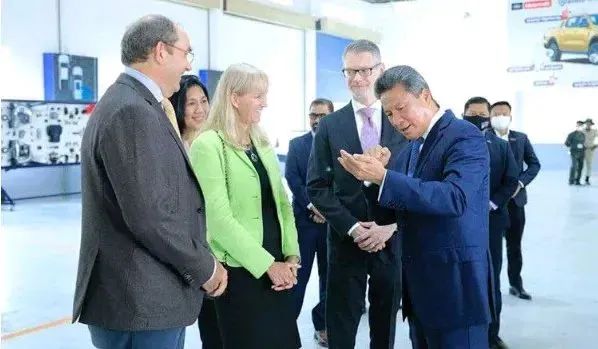
The ten-year overall plan is expected to invest over 36 billion US dollars, covering multiple fields including sea, land, and air
It is reported that in order to build Cambodia into a regional investment center, the Cambodian government has launched the Comprehensive Multimodal Transport and Logistics Master Plan (CIT-MP), which will modernize and upgrade the national infrastructure and logistics system, providing important opportunities for public and private sector investment in the country's thriving logistics industry.
CIT-MP, also known as the Comprehensive Master Plan for Cambodia's Transit and Logistics System from 2023 to 2033, identifies the priority development directions for 174 projects over the next 10 years, with an estimated total investment of 36.68 billion US dollars. The annual investment for the short to medium term from 2023 to 2027 is expected to be 3.985 billion US dollars.
The comprehensive plan covers multiple fields, including 94 highway development projects, 23 river and waterway transportation projects, 20 sea transportation projects, 10 air transportation projects, and 15 other major logistics development projects.
The highlights of CIP-MP include three new highways, namely Phnom Penh to Baima, Phnom Penh to Stung Treng, and the highway connecting Ratanakiri to Goong.
In addition, the master plan also includes plans to build a new railway from Phnom Penh to Vietnam via Prey Veng and Chai Zhen before 2030, and plans to build three additional railways by 2050, namely high-speed trains from Kampong Cham Province to Vietnam, from Kampong Cham via Kratie and Stung Treng to Laos, and from Kampong Cham via Puti Miankhi to Thailand.
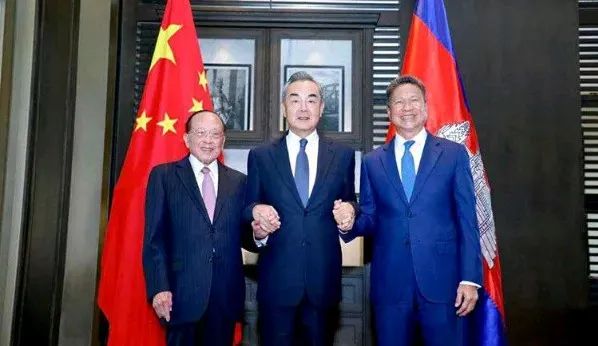
The $1.7 billion Funan Canal (FTC) project is also one of the 174 projects in Cambodia and the first project in Cambodian history to connect the Mekong River system with the sea. Prime Minister Homana has publicly stated that construction on the 180 kilometer long canal, which will connect Prek Takeo, Prek Ta Ek and Prek Ta Hing in the Bassac River basin, as well as the province of Hakuba, will begin as early as August 2024. After the completion of the canal, it will pass through the provinces of Ganla, Chajiao, and Gongbu.
The overall plan states that these over 100 measures aim to enhance the interconnectivity of transportation modes in Cambodia, while connecting with logistics centers in the region, ultimately reducing logistics costs for traders and tourists.
Cambodian business commentators believe that CIP-MP will bring long-term benefits to Cambodia's economy and population health, while also presenting unique opportunities for large infrastructure investors from around the world.
The firm determination of the Cambodian government
The CEO of an investment company in Phnom Penh stated that CIP-MP confirms the Cambodian government's clear commitment to prioritize large-scale infrastructure construction in the coming years.
He explained, "The main reason for prioritizing the construction of national highways, airports, waterways, and railways is to improve the trade convenience of Cambodia's manufacturing industry and reduce the overall trade logistics costs of the economy
He believes that although Cambodia's extensive network of Special Economic Zones (SEZ) provides manufacturers with operational convenience, it cannot ensure efficient transportation of goods to their final destination. So, that's why most of Cambodia's economic zones are concentrated near major trading ports and the border between Thailand and Vietnam. Cambodian manufacturers seeking to export their products to international markets still face higher average transportation costs than neighboring countries such as Vietnam, and in the current situation, a significant portion of Cambodian traders also rely on transportation from Vietnamese ports, which increases transportation costs. FTC is an important component of CIP-MP, with the aim of connecting the Phnom Penh freight port with the international coast, bypassing transportation time and costs in Vietnam.
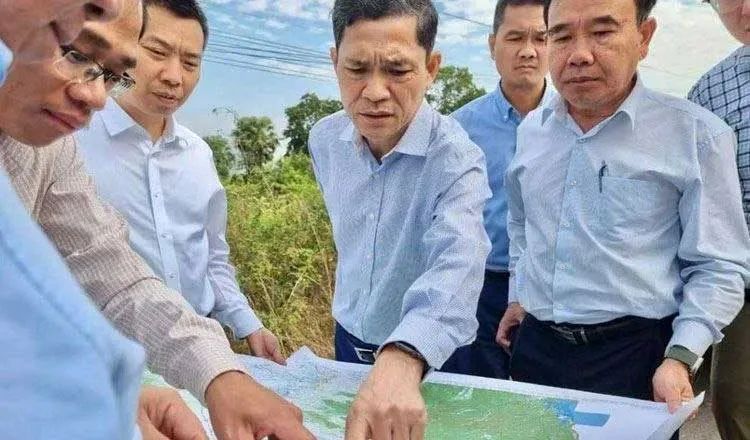
The CEO also stated that it is important that the master plan eliminates the economy's dependence on foreign infrastructure. After completion, CIP-MP will make Cambodia comparable to other manufacturing centers in the region, and even more competitive, thereby attracting investment from international manufacturers, especially Chinese manufacturers.
Another employee of the company stated that as one of the most important cost items, logistics is currently seeking new solutions. The economy of a country is not just about the products it produces. Transporting these products to other countries at low cost has now become an indispensable condition for exports.
The solution in CIP-MP will effectively reduce the transportation cost of required materials and the delivery cost of manufactured products. Although projects such as CIP-MP and FTC may seem like an extreme transformation of the country's transportation system, geographical conditions have always been the most important cost factor in the logistics sector. CIP-MP will also support the expansion of regional supply chains from countries such as Thailand and Vietnam to Cambodia.
The person cited the Panama Canal as an example, saying that although traders can calculate the advantages of shipping distance in terms of time and nautical miles, the Panama Canal option has been monopolized and there is a high demand. It is precisely for these reasons that the Nicaragua Canal project plan was formulated. Of course, if this alternative plan can one day be implemented, the monopoly of the Panama Canal will be broken, more ships will be able to pass through at the same time, and transit costs will be further reduced.
He said that according to the logic of the Nicaragua Canal project, measures such as FTC are exciting for the economy because globally, countries that provide logistics advantages through innovative ways will create more logistics connections in their regions and ultimately create more job opportunities. Inclusive logistics access nationwide is also important to confirm the government's commitment to all citizens, regardless of their location.
Commentators believe that CIP-MP's goal of reducing logistics costs will also bring positive growth to the socio-economic development, including elevating the economy to a middle-income level.
Currently, Cambodia is in a strong position in low skilled manufacturing due to its abundant labor force and competitive wage costs. In order to increase income opportunities for Cambodian workers, the economy must improve its skill levels to support medium to high skilled manufacturing. In addition to infrastructure construction, the government has recently placed great emphasis on human resources and skills development. If the country wants to achieve its income level goals, this situation will continue to exist in the coming years. To achieve this goal, skill development must continue to be a priority.
Source of Overall Planning Funds and Future Challenges
The CIP-MP program relies on three funding channels, namely the national budget, foreign financial support for public investment projects, and partnerships between the state and private entities (also known as public-private partnerships (PPP)).
According to industry insiders, as CIP-MP will be a collection of state-owned projects, the funds for each project are most likely to be investment initiatives between countries rather than attracting private investors. Phnom Penh Sihanouk Expressway is a good example, which is an intergovernmental project under the "the Belt and Road" initiative.
The newly built Phnom Penh Technology International Airport (TIA) is another example of PPP in critical transportation infrastructure. The airport is owned by Cambodia Airport Investment Corporation (CAIC), a joint venture established by the Royal Government of Cambodia (RGC), represented by the Secretariat of State for Civil Aviation of Cambodia (SSCA). In addition, CAIC is also the Overseas Investment Corporation of Cambodia (OCIC). According to the joint venture agreement, the Cambodian government grants China International Aviation Industry Corporation the exclusive right to finance, construct, operate, and own the new Phnom Penh International Airport.
Some people also believe that the state cannot concentrate all investment efforts in this field at one point, and private investors' participation in projects will naturally ensure that the existing national budget is more effectively utilized. So CIP-MP may accommodate some private investment, but this will depend on the budget plan.
Industry insiders believe that although other countries such as Japan and South Korea have also supported large-scale infrastructure construction in the past, China is still the largest aid provider for large-scale infrastructure projects to date. Based on the trend of the past decade, it can be reasonably expected that China will become the main supporter of CIP-MP in terms of funding and technological support.
He said that it can be seen that the Chinese economy has recently declined and growth has slowed down. The plan may face the risk of a slowdown in Chinese capital inflows into overseas infrastructure construction. This may pose challenges for CIP-MP. At the same time, global issues have led to greater economic instability and increased tension among central banks around the world. If interest rates rise too much, the plan may also face delays.
* Some documents are sourced from the internet. If there is any infringement, please contact the website to delete them
- ● 聚焦用工保障,聚力企业发展——专题工作会议顺利召开[2026-06-11]
- ● Official heavy reshuffle! Cambodia investment avoi[2026-06-11]
- ● Compete with the rainy season and tackle practical[2026-06-02]
- ● Save time, effort, and money | The official docume[2026-05-22]
- ● Build defense through practice and provide safe es[2026-05-20]
- ● Zhejiang Special Economic Zone Debuts at the 2026 [2026-05-13]
- ● We are serious about ensuring employment! ——Specia[2026-05-08]
- ● The 2026 Carson International Annual Conference wa[2026-01-29]
- ● The first "Wisdom Power Cup" welcome run[2026-01-09]
- ● "Unleash Full Potential, Usher in a New Era&q[2026-01-05]